In this article, you’re probably reading about a flat piece of glass. If you want to pause, you just tap it. If you want to scroll, you swipe. We do this hundreds of times a day without a second...
Editorial Team
April 5, 2026
2 min read
In this article, you’re probably reading about a flat piece of glass. If you want to pause, you just tap it. If you want to scroll, you swipe. We do this hundreds of times a day without a second thought. But have you ever stopped to wonder, how does a solid piece of glass know exactly what you’re doing? It feels like modern magic, a pinnacle of 21st-century innovation. But what if I told you the technology behind your smartphone screen was actually invented before the first moon landing? Welcome to simple things surprising histories. Today, we’re uncovering the invisible electric dance happening right beneath your fingertips.
How do touch screens actually work? To understand how these screens work, we have to go back to 1965. Starting before Steve Jobs unveiled the iPhone, a British engineer named EA Johnson was trying to solve a problem for air traffic controllers. They needed a faster, more intuitive way to interact with their radar screens. Johnson’s solution was brilliant. He coated a glass screen with a thin layer of copper, creating the world’s first capacitive touch screen.
It was bulky, and it could only register one touch at a time. But the core science was exactly the same as the phone in your pocket right now. And that science relies on one very unexpected ingredient. You. You see, there are two main types of touch screens. Older ones like on ATMs, supermarket checkouts, or the classic Nintendo DS use resistive touch. They have two flexible layers of plastic that literally get pushed together when you press hard enough. It’s basically a mechanical button. But your smartphone doesn’t care about pressure. It uses a capac,itive touch screen.
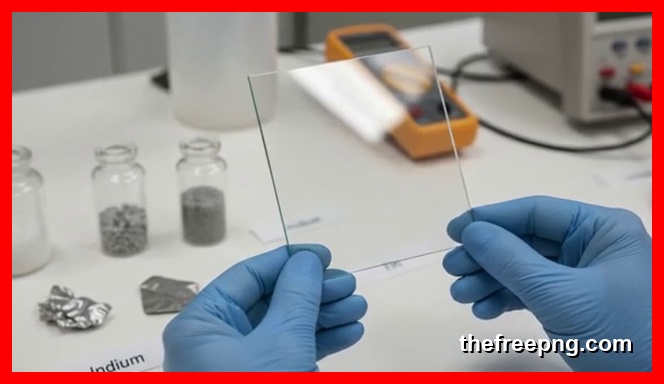
And it works because your body is an electrical conductor. You are full of water and salt, meaning electricity flows naturally right through you. Beneath the glass of your phone lies an invisible grid of microscopic wires. These wires are constantly holding a tiny electrical charge. When your bare finger comes close to the screen, you actually steal a microscopic amount of that electricity. Don’t worry, you can’t feel it, but your phone definitely does. But wait, how are their wires inside clear glass? They are made from a fascinating material called Indium-Tin Oxide.
It’s a rare metal alloy that is highly conductive, but incredibly thin and completely transparent. This invisible grid creates a delicate electrostatic field across the entire screen. When your finger absorbs that tiny bit of current, it creates a drop in voltage at a very specific intersection on the grid. Sensors around the edge of the screen instantly detect this drop. They send a message to your phone’s processor saying, hey, we just lost some electricity at Cortment X and Y. The processor then translates that exact drop in voltage into a tap, an open app, or a swipe.
All of this happens in a fraction of a millisecond. So the next time you send a text or double tap a photo, remember, you aren’t just pressing a button. You are completing an invisible electrical circuit. You are using technology pioneered in the 1960s made possible by a rare transparent metal and the salt inside your own body. If you enjoyed discovering the history and science behind this simple thing, please share this article with a curious friend, and subscribe to Simple Things Surprising Histories for more. Thank you for reading, and stay curious.
About TheFreePNG News
Your trusted source for breaking technology news, covering everything from smartphones and computers to industry leaders.